
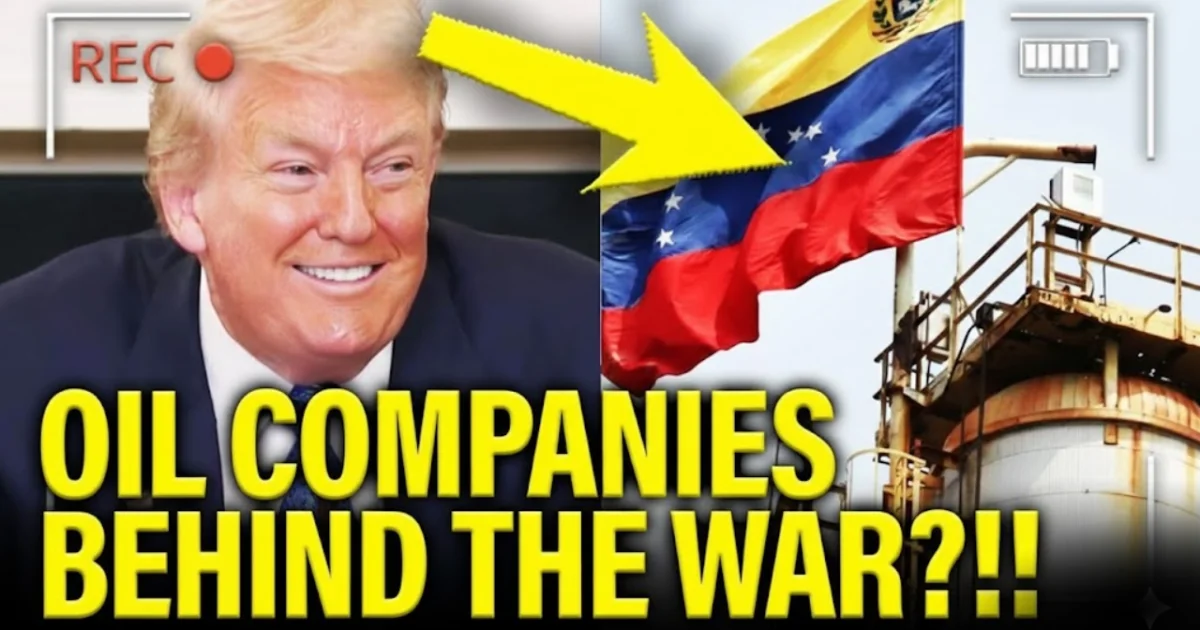
President Trump declares America will manage Venezuela and restore its oil production. Learn what this means for US energy prices and global markets.
Table of Contents
Trump Declares America Will Take Control of Venezuela and Restore Collapsed Oil Production
President Donald Trump made his boldest Venezuela statements yet, announcing that the United States will effectively manage the South American nation while rebuilding its devastated petroleum industry.
The President’s declaration signals unprecedented American involvement in Venezuelan affairs. His focus on oil infrastructure restoration highlights economic motivations alongside political objectives.
These statements carry massive implications for global energy markets and American consumers at the gas pump.
Trump’s Direct Statements
The President didn’t soften his language when discussing Venezuela’s future. His words left little room for interpretation.
Trump stated plainly that America would “run” Venezuela during a transition period. He emphasized fixing oil infrastructure as a primary objective.
Key Points From Trump’s Remarks:
- US will manage Venezuelan operations
- Oil infrastructure restoration prioritized
- American expertise will lead rebuilding
- Production increases expected rapidly
- Benefits for American consumers promised
The directness surprised even seasoned diplomatic observers. Such explicit statements about managing another nation’s affairs rarely come from American presidents.
Why Oil Infrastructure Matters
Venezuela sits atop the world’s largest proven oil reserves. Understanding this resource explains American interest.
Venezuela Oil Statistics:
| Metric | Figure |
|---|---|
| Proven reserves | 303 billion barrels |
| Global ranking | #1 worldwide |
| Current production | Fraction of capacity |
| Peak production | Over 3 million barrels daily |
| Recent production | Under 800,000 barrels daily |
This dramatic production collapse resulted from years of mismanagement, underinvestment, and sanctions. Infrastructure crumbled while expertise fled the country.
Restoring this production could reshape global energy markets significantly.
What “Running” Venezuela Means
Trump’s statement about running Venezuela requires unpacking. Several interpretations exist for what this might involve.
Possible Meanings:
- Direct American administrative involvement
- US advisors guiding government operations
- American companies leading economic sectors
- Military presence supporting transition
- Technical expertise for infrastructure
The exact framework remains unclear. However, Trump’s language suggests substantial American control rather than advisory roles.
Economic Implications for Americans
American consumers stand to benefit if Venezuelan oil production recovers. The connection between Venezuela and US gas prices is direct.
Potential Consumer Benefits:
- Increased global oil supply
- Downward pressure on crude prices
- Lower gasoline costs possible
- Reduced dependence on other suppliers
- Energy market stabilization
However, timeline matters significantly. Infrastructure restoration takes years, not months. Immediate price relief seems unlikely.
American Oil Companies Eye Opportunity
Major US petroleum corporations are watching developments closely. Venezuela represents enormous potential business opportunity.
Industry Interest Factors:
| Consideration | Opportunity Level |
|---|---|
| Reserve size | Extremely high |
| Infrastructure needs | Massive investment required |
| Profit potential | Substantial long-term |
| Technical challenges | Significant but manageable |
| Political risk | Currently elevated |
Companies like ExxonMobil, Chevron, and ConocoPhillips have historical Venezuelan experience. They could lead restoration efforts if conditions stabilize.
Chevron already maintains limited operations under special Treasury licenses. Expanded access could transform their involvement dramatically.
Infrastructure Damage Assessment
Years of neglect left Venezuelan oil infrastructure in terrible condition. Rebuilding requires enormous investment and expertise.
Current Infrastructure Problems:
- Refineries operating at minimal capacity
- Pipelines corroded and leaking
- Storage facilities deteriorated
- Port facilities barely functional
- Drilling equipment obsolete
- Skilled workforce departed
Experts estimate tens of billions of dollars needed for proper restoration. This investment timeline spans years rather than months.
Global Energy Market Impact
Venezuelan production restoration would ripple through worldwide energy markets. Multiple effects could emerge.
Market Implications:
- OPEC dynamics potentially altered
- Russian oil leverage reduced
- Middle East dependence decreased
- Global supply increased substantially
- Price stabilization possible
These shifts carry geopolitical significance beyond mere economics. Energy relationships define international power structures.
Critics Question Approach
Not everyone supports Trump’s Venezuela vision. Critics raise multiple concerns about the announced approach.
Opposition Arguments:
- Sovereignty violation concerns
- Colonial comparison accusations
- International law questions
- Resource exploitation fears
- Democratic process bypassed
These critics span domestic political opposition and international observers. Their concerns add complexity to implementation prospects.
Supporter Perspectives
Defenders of Trump’s approach offer counterarguments. They emphasize different priorities and outcomes.
Supporting Arguments:
- Humanitarian crisis demands action
- Venezuelan people benefit from restoration
- Democratic transition enables prosperity
- American interests legitimately served
- Practical solutions over diplomatic delays
This debate reflects broader disagreements about American foreign policy approaches and interventionism.
Timeline and Expectations
Realistic assessment of restoration timelines matters. Expectations should align with practical realities.
Realistic Timeline:
| Phase | Timeframe |
|---|---|
| Initial assessment | 3-6 months |
| Emergency repairs | 6-12 months |
| Production increases begin | 12-18 months |
| Significant output growth | 2-3 years |
| Full capacity restoration | 5-10 years |
Americans expecting immediate gas price relief will face disappointment. Infrastructure restoration is marathon, not sprint.
Investment Requirements
Restoring Venezuelan oil production demands massive capital investment. The scale challenges even major corporations.
Estimated Investment Needs:
- Upstream production: $30-50 billion
- Refining capacity: $10-20 billion
- Transportation infrastructure: $5-10 billion
- Port and export facilities: $5-8 billion
- Total estimated: $50-90 billion
These figures explain why Trump emphasizes American company involvement. Private investment must supplement any government role.
What Happens to Venezuelan Workers
Local workforce considerations deserve attention. Millions of Venezuelans depend on petroleum sector employment.
Workforce Factors:
- Many skilled workers fled country
- Training programs needed
- Job creation potential significant
- Local employment prioritization questions
- Technical expertise gaps substantial
How American involvement addresses local employment affects both Venezuelan prosperity and political sustainability.
Congressional Response
American lawmakers are responding to Trump’s Venezuela statements. Reactions split along predictable lines.
Congressional Perspectives:
- Republican support generally strong
- Democratic concerns about process
- Bipartisan interest in oil implications
- Oversight questions emerging
- Funding authorization debates likely
Congress will likely demand detailed briefings and may seek legislative input on any formal arrangements.
International Partnership Possibilities
America needn’t act alone in Venezuelan restoration. International partnerships could share burdens and legitimacy.
Potential Partners:
- European energy companies
- Allied nation governments
- International financial institutions
- Regional development banks
- Multinational organizations
Such partnerships could address criticism while expanding available resources for restoration efforts.

FAQs
What did Trump say about running Venezuela?
President Trump stated the United States will “run” Venezuela during a transition period and prioritize fixing the country’s collapsed oil infrastructure. His statements indicate substantial American management involvement.
How would fixing Venezuela’s oil infrastructure benefit Americans?
Restored Venezuelan oil production would increase global supply, potentially lowering crude prices and reducing American gasoline costs. Venezuela holds the world’s largest proven oil reserves.
How long would it take to restore Venezuelan oil production?
Experts estimate 5-10 years for full production capacity restoration. Initial improvements could begin within 12-18 months, but infrastructure damage requires tens of billions in investment.
Which American oil companies might work in Venezuela?
Major US petroleum corporations including ExxonMobil, Chevron, and ConocoPhillips have historical Venezuelan experience. Chevron already maintains limited operations under Treasury Department licenses.
How much investment does Venezuelan oil infrastructure need?
Analysts estimate $50-90 billion total investment required for full petroleum industry restoration including production, refining, transportation, and export facilities.
Conclusion
Trump’s announcement about running Venezuela and fixing oil infrastructure represents dramatic foreign policy shift. The implications span diplomacy, economics, and energy markets.
American consumers may eventually benefit from restored Venezuelan production. However, realistic timelines measure in years rather than months.
What do you think about US involvement in Venezuela’s oil industry? Share your perspective in the comments below.