
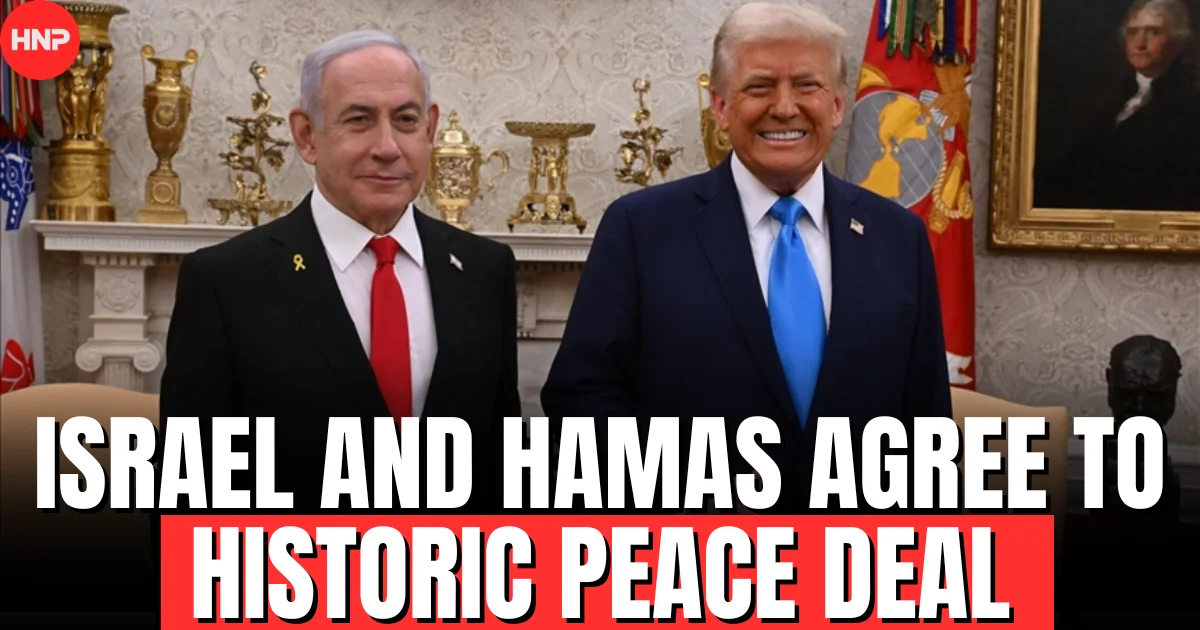
Trump confirms Israel and Hamas reached a Gaza peace deal with hostages set for release soon. See what’s next for the region’s future.
Table of Contents
Trump Announces Israel and Hamas Agree on Peace Deal, Hostage Release ‘Very Soon’
Introduction
In a historic breakthrough, President Donald Trump has announced that Israel and Hamas have agreed to implement the first phase of a U.S.-brokered peace plan, signaling a potential end to the devastating war in Gaza. According to Trump’s statement on October 8, Israeli troops will withdraw “to an agreed upon line,” and hostages held by Hamas are expected to be released within days.
The development, hailed by Trump as a “great day for the Arab and Muslim world,” marks a major diplomatic milestone after years of bloodshed and failed negotiations.
The Peace Deal and Key Terms
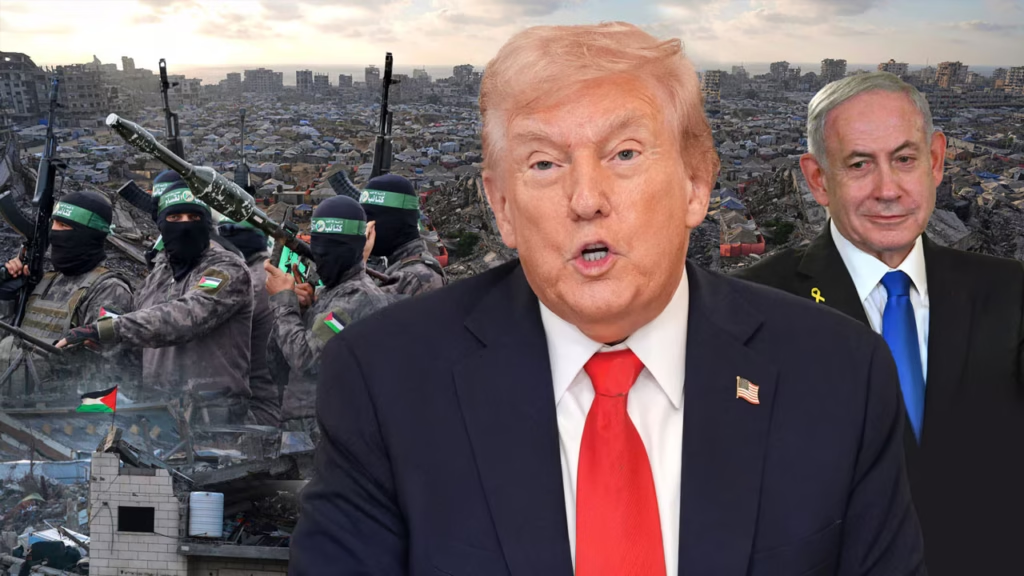
The White House peace initiative outlines a series of coordinated steps aimed at achieving stability in Gaza and restoring humanitarian balance.
Key highlights of the first phase include:
- Hostage Release: All remaining 48 hostages, including two American citizens, are to be freed within 72 hours of the agreement’s ratification.
- Prisoner Exchange: In return, Israel will release Palestinian prisoners currently detained in its jails.
- Military Withdrawal: Israel will pull back its forces to a designated line in Gaza within 24 hours after the deal’s formal signing.
- Humanitarian Aid: Immediate resumption of food, medicine, and relief supplies to Gaza’s civilians.
- Amnesty Clause: Hamas members who surrender their weapons and renounce violence will receive amnesty under the peace plan.
Trump thanked mediators from Qatar, Egypt, and Turkey, crediting their cooperation for making this “historic and unprecedented event” possible.
International and Regional Reactions
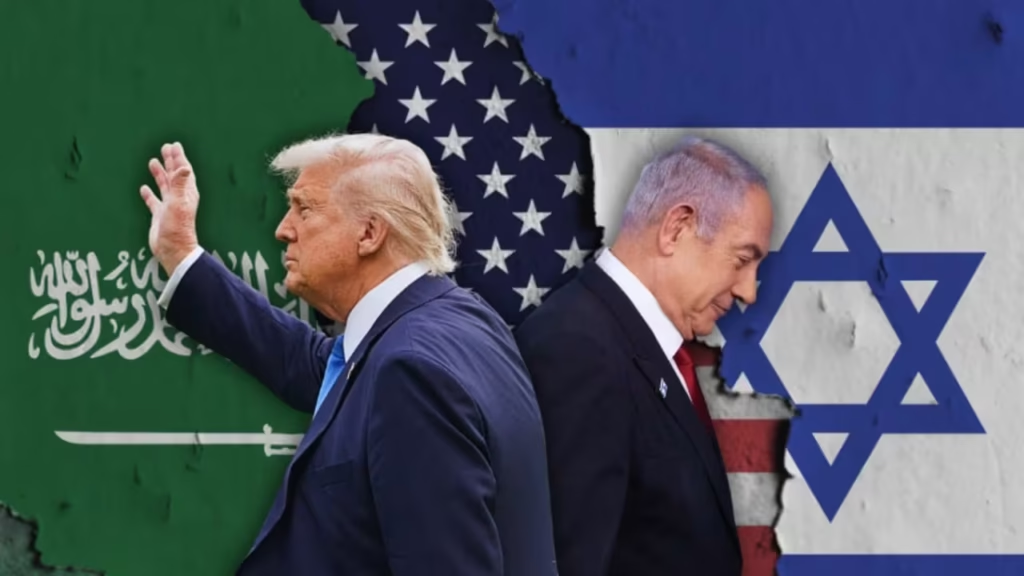
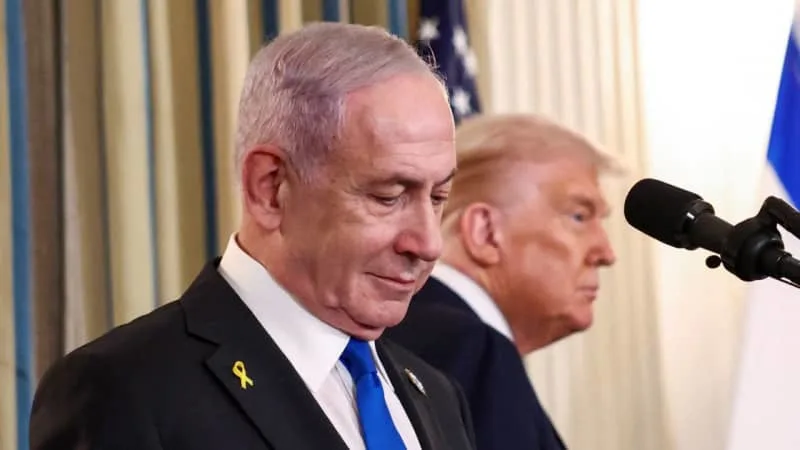
Israeli Prime Minister Benjamin Netanyahu expressed deep gratitude toward Trump, calling it a “great day for Israel.” He confirmed that he will convene the Israeli government to formally approve the deal and ensure the safe return of hostages.
In a message on X, Netanyahu said he would bring the agreement before his government to ensure the safe return of all remaining hostages.
Meanwhile, Hamas issued a statement via Telegram thanking Trump for his mediation and acknowledging the “sacrifices of our people.” The group signaled readiness to hand over Gaza’s governance to a coalition of Palestinian technocrats, although it remains hesitant to disarm completely.
U.S. lawmakers from both parties reacted cautiously:
- Rep. Brian Mast (R-FL) called the deal “the closest the world has come to Gaza peace.”
- Sen. Jacky Rosen (D-NV) described it as “a step toward healing.”
- Senate Majority Leader Chuck Schumer said the agreement offers “a huge sigh of relief” but warned of challenges ahead.
The Road Ahead — Implementation and Challenges
According to a senior White House official, the hostage releases could begin as early as Monday, following Israel’s formal acceptance of the plan. Once the withdrawal line is secured, humanitarian operations will resume under international supervision.
However, skepticism persists among diplomats. Past ceasefire attempts collapsed under mutual distrust, and Hamas’ reluctance to fully disarm could still derail progress.
Analysts caution that “the first phase is only the beginning.” Long-term peace will depend on sustained diplomatic engagement and mutual accountability between both sides.
Scenes of Relief and Celebration
In Tel Aviv’s Hostage Square, hundreds gathered at dawn to celebrate Hamas’ acceptance of the deal. Families of the captives hugged, cried, and toasted with champagne after nearly two years of anguish.
Former hostage Omer Shem Tov, held for 505 days in Gaza, expressed joy but tempered expectations:
“You feel happiness and pressure, because until you’ve hugged your mother, it hasn’t happened.”
A New Chapter for Middle East Diplomacy
The Gaza accord could reshape the geopolitical balance in the region. Trump hinted that he might travel to Egypt or Israel to personally oversee the next steps of the agreement.
Netanyahu has also invited Trump to address the Israeli Knesset, a symbolic move underscoring renewed cooperation between Washington and Jerusalem.
If implemented successfully, the deal may serve as a model for broader peace efforts across the Middle East—potentially influencing future U.S. foreign policy and energy partnerships.

FAQs
Q1. What is the main highlight of Trump’s Gaza peace deal?
The plan centers on a hostage exchange, troop withdrawal, and humanitarian aid to restore peace between Israel and Hamas.
Q2. When will the hostages be released?
According to the White House, releases could begin by Monday, within 72 hours after both sides formalize the agreement.
Q3. What role did other nations play in the peace deal?
Qatar, Egypt, and Turkey acted as mediators, facilitating communication between Israel, Hamas, and U.S. officials.
Q4. Will Hamas disarm under this plan?
The deal offers amnesty to Hamas members who surrender weapons, though complete disarmament remains uncertain.
Q5. How will this impact U.S. foreign policy?
The agreement strengthens U.S. diplomatic influence in the Middle East and supports regional stability through negotiated peace.
Conclusion
The Trump-brokered Israel-Hamas peace agreement marks a pivotal turning point in one of the world’s most enduring conflicts. With hostages set for release and troops preparing to withdraw, the path toward sustainable peace seems closer than ever—though challenges remain.
If fully implemented, this could become one of the most consequential diplomatic achievements in modern history.
👉 Stay tuned for updates on the deal’s progress and the next phase of Middle East peace efforts.