

Trump announces massive 130% tariffs on Chinese goods, reigniting global trade tensions. Here’s what it means for the economy and investors.
Table of Contents
Trump Unveils 130% Tariffs on China, Signaling a Renewed Global Trade Showdown
Introduction
President Donald Trump has reignited the global trade war with China by announcing new 130% tariffs on imported Chinese goods. The decision marks the sharpest escalation in US-China economic tensions since 2019. Starting November 1, the additional 100% tariff will stack atop existing 30% duties, signaling a dramatic policy shift after months of relative calm.
Trump made the declaration Friday on Truth Social, claiming that the move was necessary to counter China’s export restrictions on rare earth elements — critical materials used in electronics, defense, and clean energy industries.
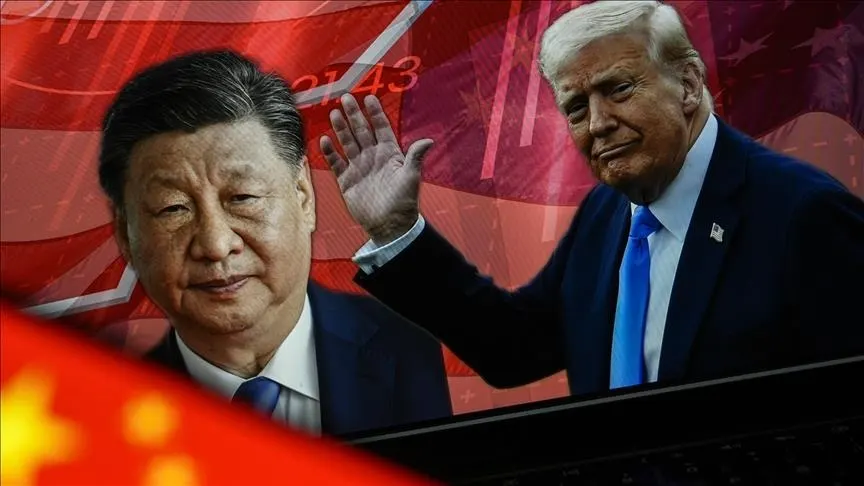
Trump’s Tariff Bombshell — 130% Total on Chinese Goods
In his Truth Social post, Trump stated:
“The United States plans to introduce an additional 100% duty on Chinese imports, adding to the tariffs already in place,” Trump declared on Friday.
He also confirmed new export controls on critical software and technology, signaling a renewed hardline stance toward Beijing. The timing, just weeks before a planned summit with President Xi Jinping, suggests a breakdown in diplomatic efforts.
Trump’s announcement follows China’s export curbs on rare earths, vital for manufacturing semiconductors, batteries, and defense systems. As a result, Washington canceled the upcoming meeting in South Korea, underscoring the deteriorating relations between the world’s two largest economies.
Market Shock — Investors React to Trade War Fears
Financial markets reacted instantly to Trump’s announcement.
- Dow Jones fell 878 points (1.9%)
- S&P 500 dropped 2.7%
- Nasdaq tumbled 3.5%
Investors fear a repeat of 2018–2019, when trade tensions between the US and China triggered global supply chain disruptions and slowed economic growth.
Although Trump often uses trade threats as negotiation tactics, analysts warn that even temporary uncertainty can drive capital outflows and increase inflation pressures.
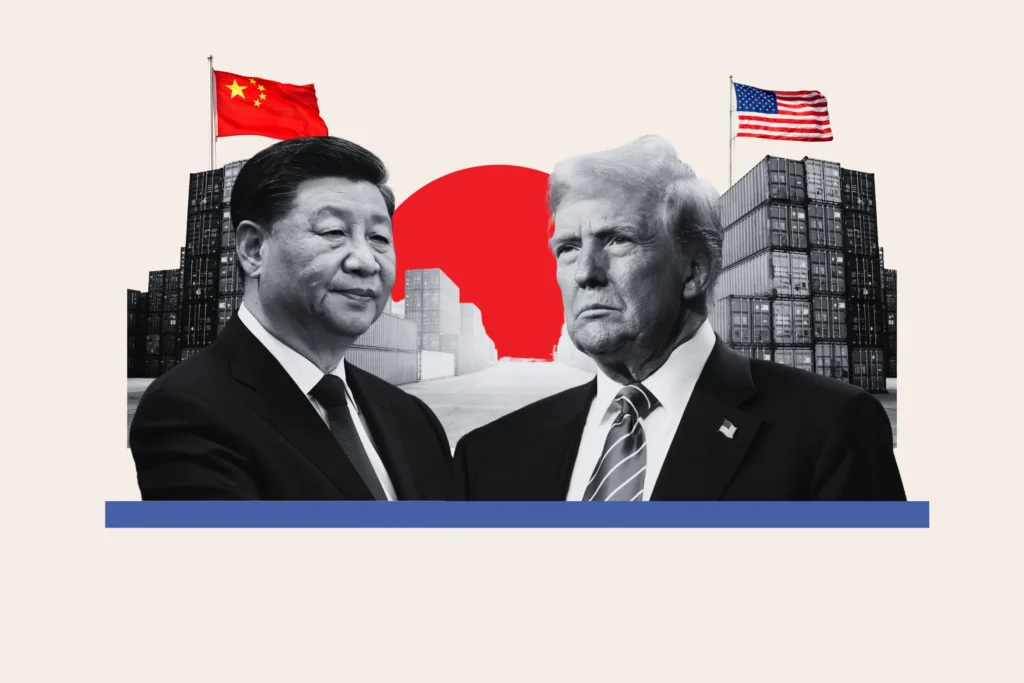
Why China Matters — Economic Interdependence Runs Deep
Despite Trump’s tough rhetoric, the US and China remain deeply interdependent.
- The US relies on China for electronics, apparel, and furniture worth hundreds of billions annually.
- China depends on American semiconductors, agricultural exports, and defense technologies.
While Trump has encouraged US companies to onshore production, major firms like Apple and Tesla still depend heavily on Chinese supply chains.
Earlier this year, a temporary tariff reduction (from 145% to 30%) led to stock market rallies in both countries, showing how closely linked the two economies remain.
Escalation or Strategy? What Comes Next
Trump accused Beijing of violating rare earth agreements, sparking his latest move. But experts note the timing — just months before the 2025 election season — may also reflect political strategy.
In response, Beijing introduced new surcharges on American cargo vessels, mirroring Washington’s recent limits on Chinese fleets. With both nations digging in, the trade conflict is poised to escalate further.
Adding to uncertainty, Trump’s authority to impose unlimited tariffs faces a Supreme Court challenge next month, while President Xi Jinping remains unconstrained.
How This Affects Consumers and Businesses
If the tariffs take effect:
- Electronics prices in the US could rise 10–20%
- Furniture and apparel may see similar hikes
- Tech firms could face production delays or supplier shortages
- Investors might see increased volatility across global markets
The move may bolster domestic manufacturing, but at the cost of higher consumer prices and global economic strain.
❓ FAQs
Q1. Why did Trump impose 130% tariffs on China?
Trump cited unfair trade practices and China’s rare earth export restrictions as reasons for imposing higher tariffs.
Q2. When will the new tariffs take effect?
The additional 100% tariffs, on top of the existing 30%, are set to begin November 1, 2025 or earlier.
Q3. How will these tariffs affect American consumers?
Prices for imported electronics, apparel, and furniture may rise, potentially increasing inflationary pressure.
Q4. How might China respond?
China has already begun retaliatory measures, including new fees on US-operated ships and possible export limits on key technologies.
Q5. What sectors are most at risk?
Technology, manufacturing, and retail sectors face the biggest risks from higher import costs and disrupted supply chains.
🏁 Conclusion
Trump’s decision to impose 130% tariffs on Chinese goods marks a defining moment in global trade relations. As Washington and Beijing exchange economic blows, investors, manufacturers, and consumers brace for renewed uncertainty.
If this escalation persists, the global economy could face higher prices, tighter supply chains, and volatile markets—echoing the trade turbulence of past years.
👉 Stay tuned for updates on how these tariffs reshape global trade and investment trends.