

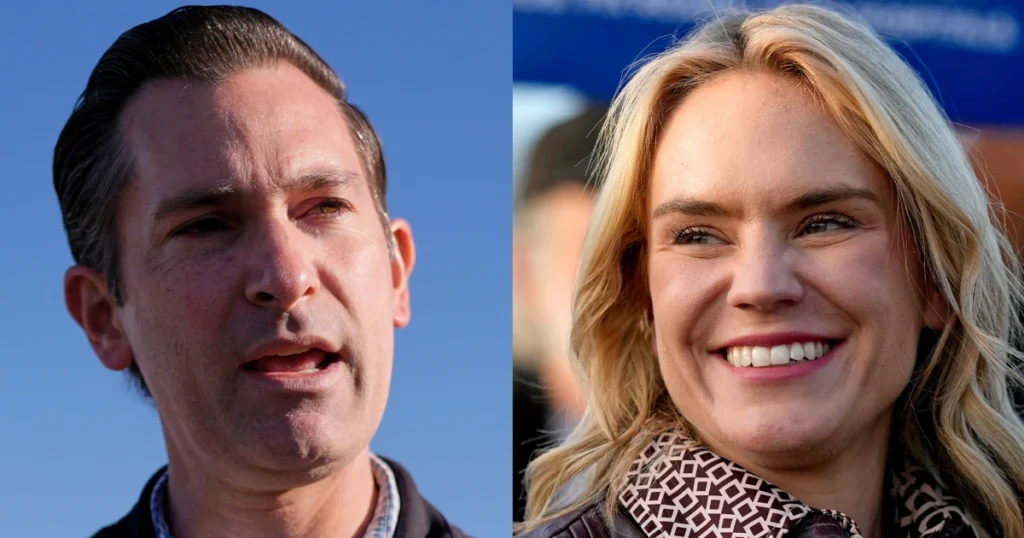
Matt Van Epps defeats Aftyn Behn in Tennessee’s 7th District, but the GOP’s shrinking margin raises red flags for 2026 midterms. Here’s what it means.
Table of Contents
Tennessee GOP Holds Seat in Nail-Biter Special Election—Democrats Close Gap Dramatically
Introduction: When Winning Feels Like Losing
Matt Van Epps secured his congressional seat Tuesday night. Republicans popped champagne. But behind closed doors? Panic is setting in.
The Tennessee 7th District delivered a GOP victory—technically. Van Epps crossed the finish line roughly nine points ahead of his Democratic challenger, Aftyn Behn. Sounds comfortable, right?
Not when you remember Republicans dominated this identical territory by twenty-two points barely twelve months ago.
That’s not a victory lap. That’s a warning siren.
This sprawling district—stretching from Alabama’s northern border up toward Kentucky, cutting through chunks of Nashville—hasn’t sent a Democrat to Congress since Ronald Reagan occupied the Oval Office. Four decades of unbroken Republican dominance.
Yet Behn nearly shattered that streak.
Both national parties understood the stakes. Millions flooded into Tennessee. Former Vice Presidents descended upon the state. Trump himself staged a virtual rally. All for a seat Republicans should have locked up without breaking a sweat.
What does this dramatic tightening reveal about American politics heading toward 2026? About Trump’s actual pull with voters? About whether Democrats have finally discovered their fighting spirit?
Everything you need to understand is right here.

Breaking Down Tuesday’s Tennessee Showdown
Official Outcome
Military veteran Matt Van Epps claimed victory over progressive activist Aftyn Behn by an estimated nine-point spread.
Van Epps built his entire campaign around unwavering Trump loyalty. That gamble paid off—barely—after securing a crucial eleventh-hour presidential endorsement that pushed him through a brutal primary.
Behn charted a different course entirely. She hammered relentlessly on pocketbook anxieties: skyrocketing grocery bills, unaffordable housing, healthcare access. Bread-and-butter concerns that transcend partisan lines.
How Did This Seat Become Available?
Representative Mark Green unexpectedly departed Congress mid-summer 2025, chasing private-sector opportunities. His resignation triggered this high-stakes special election in territory Republicans considered bulletproof.
Understanding The Battleground Geography
Tennessee’s 7th spans diverse terrain—rural farmland, small manufacturing towns, affluent Nashville suburbs. Culturally conservative. Economically anxious. Trump captured Tennessee overall with a commanding sixty-four percent last November.
Behn managed to flip just one county: Davidson, Nashville’s urban heart. Everywhere else? Van Epps territory. But those margins tell a concerning story for Republicans.
Decoding Why This “Victory” Terrifies GOP Strategists
The Numbers Don’t Lie
Consider this side-by-side comparison:
| Contest | Republican Advantage |
|---|---|
| November 2025 General | +22 percentage points |
| August 2025 Special | ~+9 percentage points |
Thirteen points evaporated in under a year. In safely conservative territory. With maximum party resources deployed.
That trajectory keeps Republican operatives awake at night.
Whispered Concerns Behind Capitol Doors
Off-the-record reactions from GOP insiders paint a troubling picture.
One congressional staffer confided to reporters that the outcome felt uncomfortably narrow. Another sitting House member offered blunter analysis: survival depends on unified messaging and disciplined White House coordination—neither of which seems guaranteed.
Translation? Confidence is shaky.
Implications For House Control
Republicans currently govern with an impossibly thin House majority. Every single seat matters. Losing Tennessee would have triggered genuine crisis—not merely symbolic embarrassment, but tangible mathematical disaster.
They survived. Just barely.
But here’s the terrifying question haunting GOP leadership: if Democrats can engineer thirteen-point swings in deep-crimson Tennessee, what unfolds in genuinely competitive suburban battlegrounds next November?

Democratic Perspective: Defeat That Tastes Like Progress
Behn’s Localized Messaging Connected
Aftyn Behn deliberately avoided nationalizing her campaign. No fiery progressive manifestos. No culture war skirmishes.
Instead, she spoke directly to everyday struggles:
- Paychecks stretched impossibly thin
- Medical bills crushing family budgets
- Crumbling local infrastructure
This disciplined kitchen-table approach transformed an unwinnable race into a genuine contest.
National Democrats Invested Heavily
Party leadership recognized Tennessee’s symbolic importance. Kamala Harris arrived to energize supporters. Al Gore returned to his home state for high-profile campaign events.
The financial commitment matched the star power. Democrats poured substantial resources into a district they’d essentially abandoned for decades.
Behn’s Defiant Post-Election Message
Addressing supporters despite her loss, Behn framed the results optimistically: something transformative had ignited. Washington insiders never imagined Democrats competing this fiercely here.
Campaign consultant Ian Russell echoed that sentiment, emphasizing how Republicans desperately scrambled resources to defend supposedly safe ground. That desperation, he argued, signals genuine vulnerability heading toward midterm season.

Examining Trump’s Electoral Influence
Van Epps Embraced Full MAGA Identity
Zero daylight existed between Van Epps and Trumpism. He campaigned explicitly as Trump’s chosen warrior, accepting the president’s endorsement and welcoming a virtual rally appearance.
Following his narrow win, Van Epps declared that abandoning Trump guarantees defeat while embracing Trump ensures victory. Politicians distancing themselves from presidential priorities, he warned, invite electoral punishment.
Reality Complicates That Narrative
Examine the actual evidence:
- Van Epps squeaked through by single digits
- Trump dominated Tennessee by sixty-four percent months earlier
- Direct presidential involvement couldn’t replicate blowout margins
If Trump’s backing can’t deliver commanding victories in America’s most favorable Republican terrain, where exactly does his electoral magic work?
Presidential Reaction
Trump celebrated the outcome via social media, characterizing the race as Democrats deploying maximum resources against his handpicked candidate.
Accurate regarding spending. Conspicuously silent regarding the collapsing margins.
2026 Midterm Implications: Reading The Tea Leaves
Historical Patterns Favor Opposition Parties
Midterm elections traditionally punish whichever party controls Washington. With Republicans commanding the White House alongside both congressional chambers, historical gravity works against them.
Tennessee’s results suggest that gravity is already pulling hard.
Suburban Swing Districts Face Elevated Risk
Perform some quick electoral math:
If traditionally safe Republican strongholds experience thirteen-point swings, genuinely competitive districts become Democratic pickup opportunities.
Suddenly vulnerable:
- Philadelphia collar counties
- Atlanta northern suburbs
- Phoenix metropolitan corridors
- Midwestern manufacturing towns
The battlefield expands dramatically.
Grassroots Energy Matters
Special elections reveal which side possesses genuine enthusiasm. Tennessee demonstrated Democrats willing to organize, donate, and mobilize—even in hostile territory.
That organizational muscle carries forward.

Underlying Voter Sentiment: Bigger Patterns Emerging
Economic Anxiety Dominates Everything
Behn’s economic messaging resonated powerfully—even among traditionally conservative voters. Americans everywhere feel financial pressure:
- Supermarket sticker shock
- Rent consuming larger income shares
- Insurance premiums climbing relentlessly
Candidates acknowledging these everyday burdens authentically—rather than offering abstract ideological arguments—gain traction across partisan boundaries.
Is Trump Enthusiasm Fading?
Even within Trump’s strongest territories, intensity appears diminished. Voters enthusiastically backing Trump personally aren’t automatically transferring that energy toward down-ballot Republicans.
That enthusiasm gap creates structural challenges for GOP candidates nationwide.
FAQ Section
Who claimed victory in Tennessee’s 2025 special congressional election?
Matt Van Epps, the Republican candidate, secured Tennessee’s 7th Congressional District seat by defeating Democrat Aftyn Behn with approximately a nine-point advantage.
What circumstances created this special election opportunity?
Republican Representative Mark Green voluntarily left Congress during summer 2025, pursuing private business ventures and creating the vacancy.
How does this margin compare to previous results?
Republicans won this district by twenty-two points during November 2025. The special election margin of roughly nine points represents a thirteen-point swing toward Democrats.
What potential impact does this have on upcoming midterms?
The substantial margin reduction in solidly Republican territory suggests Democrats could compete effectively in swing districts during 2026 midterm elections.
What role did President Trump play in this race?
Trump publicly endorsed Van Epps and conducted a virtual campaign rally supporting him. Van Epps explicitly aligned himself with Trump’s agenda throughout his campaign.
What was Aftyn Behn’s campaign strategy?
Behn concentrated almost exclusively on economic concerns affecting everyday Tennesseans—affordability struggles, healthcare costs, and local community investment needs.